VISUALIZING H.R. 1 CUTS
Medicaid and SNAP are lifelines for Maine’s families
H.R. 1 (the 119th Congress) is the major federal budget reconciliation legislation signed into law as the "One Big Beautiful Bill Act" on July 4, 2025.
The legislation will have significant impacts to Medicaid, Supplemental Nutrition Assistance Program (SNAP) and the Affordable Care Act (ACA) marketplace, and the children and families who rely on them.
projected total snap & medicaid funding loss in maine by 2034
Learn More about the Impact
SNAP + Medicaid Maps
SNAP Maps
Medicaid Maps
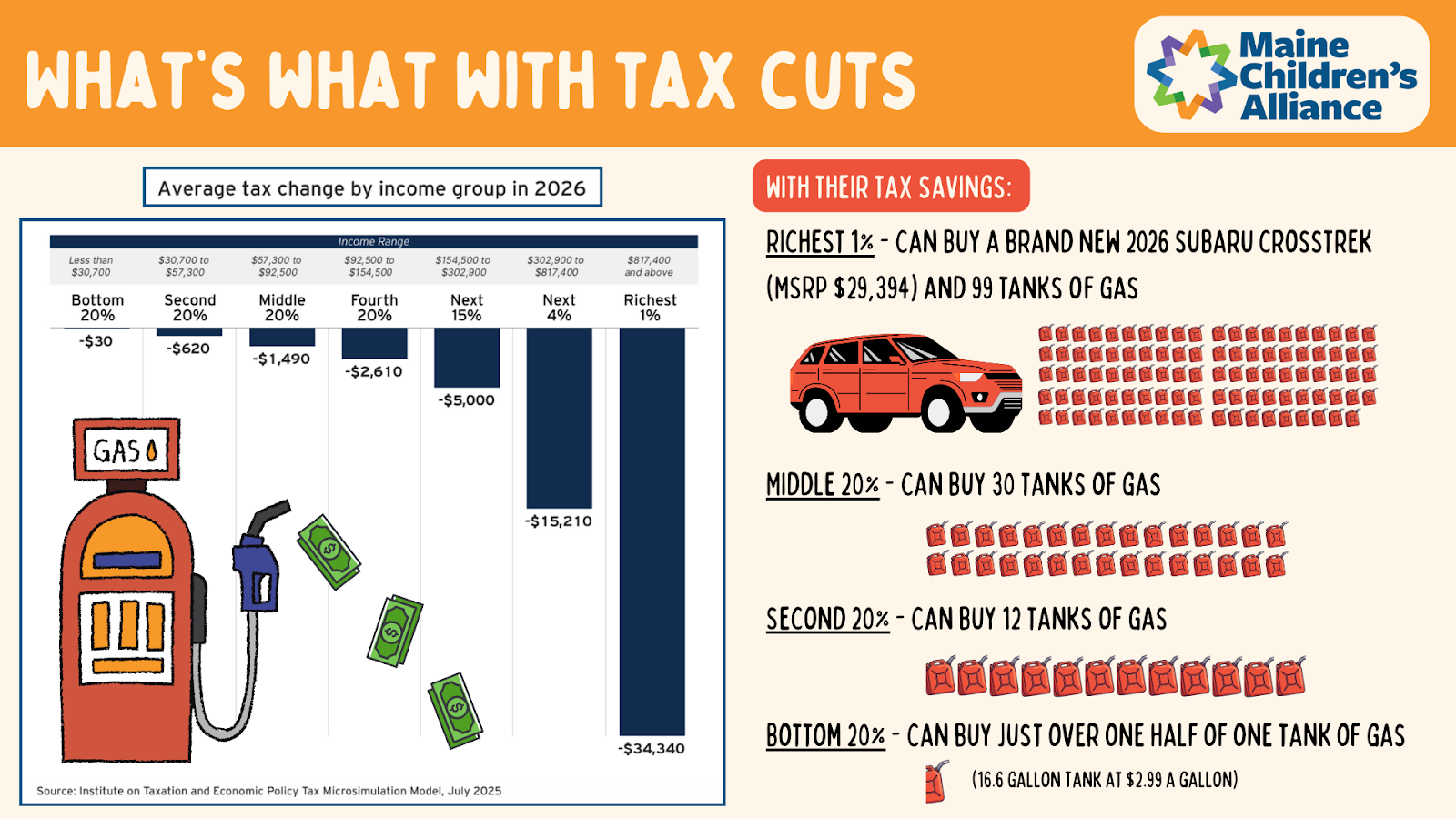
Tax Cuts from H.R. 1
Medicaid & SNAP Terminology
- Medicaid: Medicaid is a public health insurance program that covers a wide range of services, including doctor visits, hospital care, prescription drugs, mental health treatment, long-term care, and preventive services. Such coverage ensures low-income children, adults, older adults, and people with disabilities can access the care they need without facing crushing medical costs.
- SNAP: The Supplemental Nutrition Assistance Program (SNAP) provides families with additional funds to access nutritious foods. This prevents food insecurity, contributes to the economy, promotes health, and respects human dignity, benefiting all Mainers, not just those enrolled.
- Coverage Loss: When a person is no longer enrolled in their state’s Medicaid program, often due to changes in eligibility, like increased income, failing to complete paperwork, or falling out of compliance with state-imposed requirements, such as work requirements.
- Funding Loss: This typically refers to a reduction in the federal government’s financial contribution to the state’s Medicaid program, which can lead to budget shortfalls and, in turn, to cuts or reductions in services for enrollees, resulting in increased disenrollment or higher out-of-pocket costs for healthcare.

Data Limitations
All projections are rooted in past trends and cannot account for future state-level policy behavior (e.g., state-level investments, future error rates, work-requirement implementation, individual behavioral responses). As mentioned above, allocating state-level data to the county level assumes a proportional impact across all maps. Furthermore, the SNAP funding map should be interpreted with additional caution, given that national funding loss estimates were translated to the state and county levels using household-level enrollment proportions. As more up-to-date estimates emerge, Maine Children’s Alliance plans to update these maps and create additional ones.
Want to make a difference for Maine kids & families?
Whether you're a parent, policymaker, or community leader, your voice matters. Together, we can shape policy that puts children and families first.